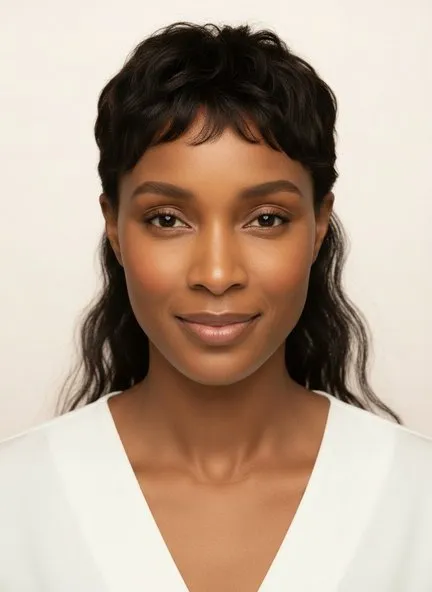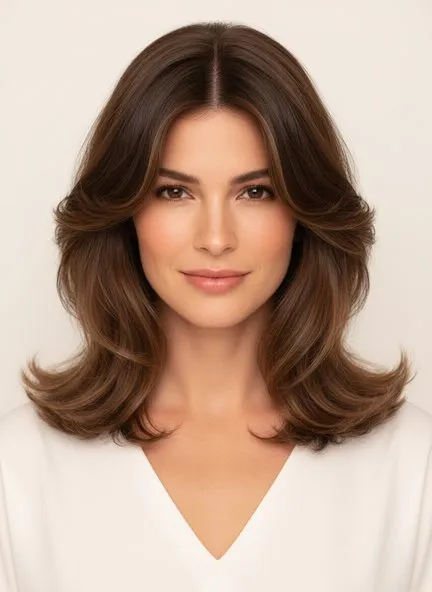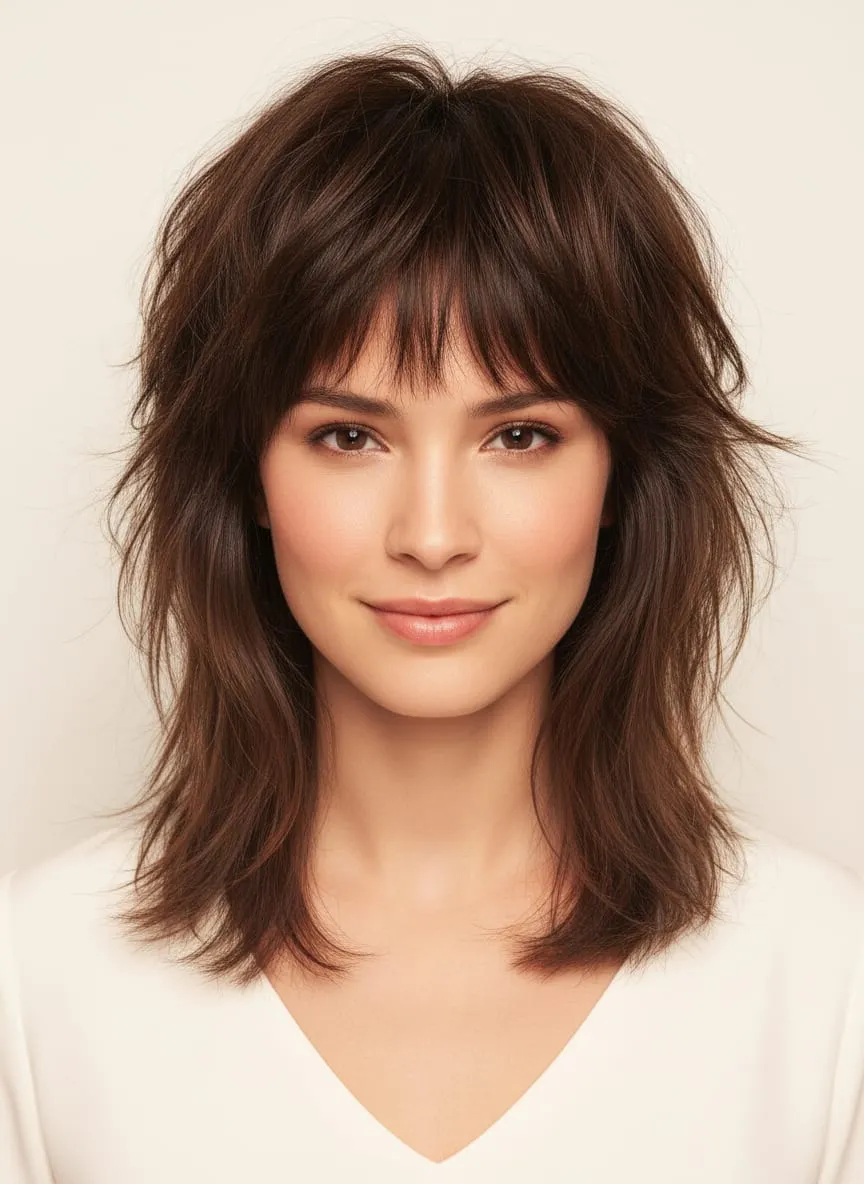
Wolf Cut
The wolf cut stacks shaggy crown layers into long wispy ends for volume without weight. Who it flatters, who should skip it, and how to see it on your own selfie first.
- Flatters
- ovalheartround
- Upkeep
- medium
Ask your stylist for
“a wolf cut — shaggy layers through the crown blending into longer ends, with a wispy fringe”
Opens the app on iPhone & Android. One selfie, no salon visit.
Not sure it is you? Find your face shape first.
Split the difference between a shag and a mullet and you get the wolf cut: layers stacked high and heavy through the crown, dropping away into long, wispy ends, with a fringe doing the framing. It arrived as a viral haircut, which usually predicts a short life, and instead it stayed — because the volume trick underneath it is real.
Volume up top, air at the ends
The cut is a redistribution more than a shortening. Weight leaves the mid-lengths and moves to the crown, so hair that normally lies flat by lunchtime stands up on its own. That makes fine to medium hair the natural home for it, and the resulting silhouette settles most naturally on oval and heart shapes; a round face gains from the vertical lift. Long faces need a second thought, since crown height plus a straight fall of ends can add inches to a face already reading long — a fuller, wider fringe solves most of that, so ask for it up front.
Who should walk away
Thick, coarse hair. The wolf cut is supposed to remove weight, but on genuinely heavy hair the crown layers expand outward rather than falling, and the result is a pyramid your stylist has to keep carving at. If you want it anyway, budget for aggressive interior thinning.
Skip it, too, if you are attached to the length you have now. Because the cut works by moving weight upward, the shortest pieces start somewhere near your ear, and returning them to your shoulders runs to twelve months of deliberately doing nothing. There is no partial undo: you either keep the silhouette or you wait it out.
Wolf, not mullet
The family resemblance is close enough that vocabulary matters. The difference is where the shortest layer sits: a wolf cut keeps its short pieces up around the crown and blends them continuously into the length, while a mullet concentrates the contrast between the sides and the nape. Say you want the layering blended rather than disconnected, and describe the fringe separately — wispy and separated, not blunt. Upkeep runs medium: it air-dries happily, but book a reshape roughly every two months, or the crown layers grow down into the lengths and the whole thing flattens into ordinary long layers.