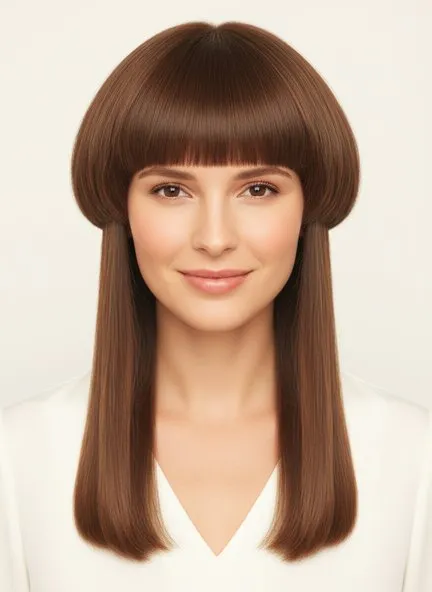
Modern Mullet
The modern mullet keeps the long nape and sands the disconnection down into soft layers. Who it suits, how much upkeep it really takes, and how to see it on your own face.
- Flatters
- ovalroundsquare
- Upkeep
- medium
Ask your stylist for
“a soft, modern mullet — subtle disconnection, longer in the back, with layered pieces framing the face”
Opens the app on iPhone & Android. One selfie, no salon visit.
Not sure it is you? Find your face shape first.
The mullet came back sanded down. Today’s version holds on to the one structural idea — shorter through the top and sides, longer at the nape — and abandons the hard border between them, blending that step into layers that carry forward around the face. Done properly it reads as a silhouette someone chose, not a joke someone is in on.
How much mullet do you actually want
There is a dial here, and where you set it is the whole decision. Turned low, the top runs only slightly shorter than the sides and the back grazes the collar; most people will file it away as a shaggy layered cut and think no more about it. Turned high, the disconnection is legible from across a room and announces itself before you do. Stylists cut to the number you hand them, so hand them one: how far past the collar the length should fall, and whether you want that step visible or merely felt.
Texture has the louder vote
Straight and wavy hair shows the outline most plainly, which is why it dominates the reference photos. Round and square faces gain the most, since the layered pieces at the front break up width across the cheeks and jaw. Fine hair does well because the nape length reads as substance rather than sparseness. The harder case is thick, coarse hair: without serious interior weight removal the top sits over the length like a helmet. Curls can absolutely wear it, but the shape has to be cut dry to your pattern — cut wet, a mullet springs back rounder and shorter than anyone planned.
Be clear-eyed about one thing: this cut is not neutral. It is read as a statement in most rooms, and if you decide against it, matching the top back to the length takes the better part of a year.
Living with the back
Medium upkeep, most of it out of sight. Every eight weeks or so the nape needs reshaping or it merges into the sides and the outline goes vague. Styling is a rough dry and a little cream or salt spray through the ends. Check the back in a second mirror before you leave the chair — it is the angle you never see and everyone behind you does.