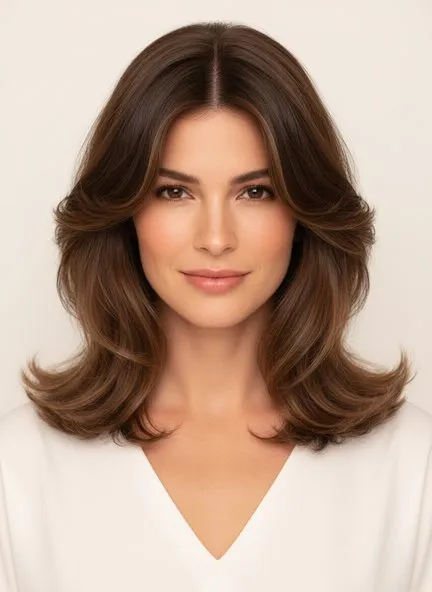
Modern Shag
A wash-and-go layer cut built on soft face-framing pieces and lived-in texture. Who the modern shag flatters, the two situations where it disappoints, and how to try it on your own photo.
- Flatters
- ovalroundsquareheart
- Upkeep
- low
Ask your stylist for
“a modern shag with soft face-framing layers and lived-in texture — nothing too choppy”
Opens the app on iPhone & Android. One selfie, no salon visit.
Not sure it is you? Find your face shape first.
The shag never actually went away; it got quieter. The current cut swaps the heavy, choppy layering of a few years ago for softer face-framing pieces and a finish that looks slept in on purpose. It is built around air drying rather than around a round brush, which is most of why it keeps landing at the top of low-effort trend lists.
Built for the texture you already have
A shag can sit at the chin, at the shoulders, or well below them — length is not what defines it. What defines it is where the weight goes: layers start short near the crown and lengthen as they travel down, so the hair falls in tiers instead of one solid curtain. That structure gives fine hair apparent body and takes bulk out of thick hair without thinning the ends, and it lets waves and curls do what they were already trying to do. Face-framing pieces along the cheek soften a round face and take the corners off a square jaw, while a wispy fringe balances a wider forehead on a heart shape.
Where the shag disappoints
Two situations. Straight, fine hair with no natural bend can leave the layers looking separated and sparse instead of piecey — texture spray stops being optional, and you may end up styling more than before, not less. And anyone who lives in a ponytail should think twice: the short crown layers are precisely the pieces that spring loose the moment hair goes up, so half your cut ends up framing your face whether you asked it to or not.
The other honest note is that layers only leave by growing. A shag you dislike is nine months of patience, not a quick correction.
Ask for soft, not choppy
Upkeep is genuinely low — a trim roughly every three months, and it grows out without a hard line to apologize for. The risk is in the wording, not the schedule. The words that get people into trouble are choppy and lots of layers, both of which invite a heavier, more dated version of this cut. Name the shortest layer you can live with, point at where it should hit on your face, and if your hair waves or curls, ask for it cut dry.