Butterfly Cut
The butterfly cut adds volume and face-framing layers without losing your length. Who it suits, why it is really a blow-dry cut, and how to preview the shape on your own photo.
- Flatters
- ovaloblongsquareheart
- Upkeep
- medium
Ask your stylist for
“a butterfly cut with the shortest face-framing layer at my cheekbone, blended into long layers underneath, and my overall length left where it is”
Opens the app on iPhone & Android. One selfie, no salon visit.
Not sure it is you? Find your face shape first.
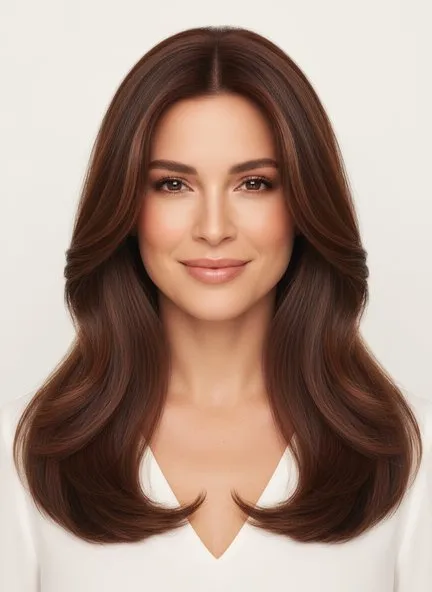
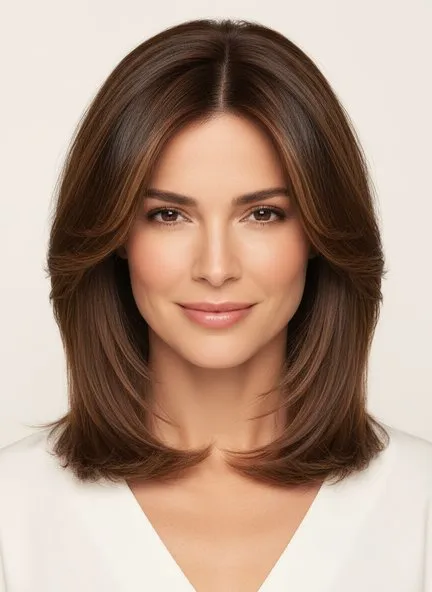
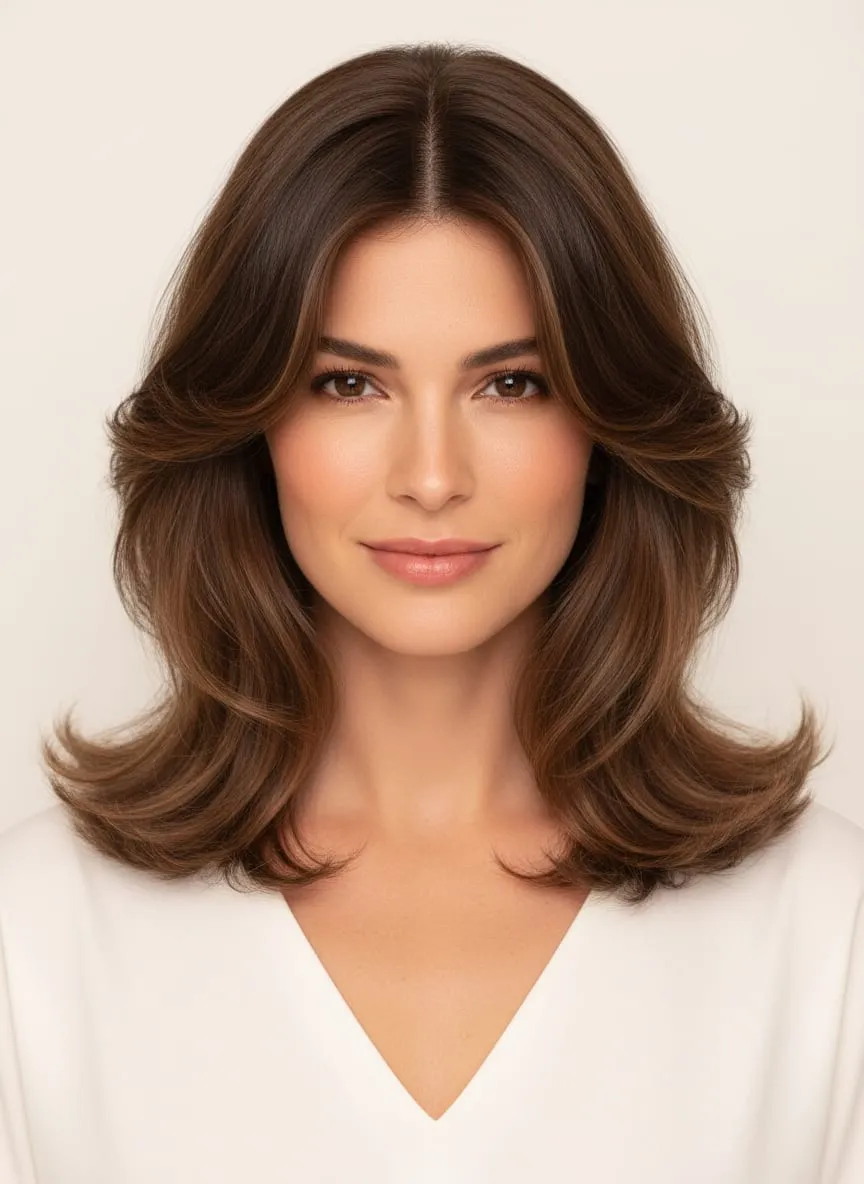
The butterfly cut is a compromise dressed up as a trend, and a good one: the volume and face-framing of a heavily layered cut, with none of the length surrendered. Short layers begin somewhere around the cheekbone, much longer layers run underneath, and the two are blended so that when the front sections are flicked back they sweep away from the face like wings.
The hair it was built for
Long and heavy is the ideal brief. If your length has gone flat and shapeless from its own weight, this cut removes bulk exactly where it drags — through the mid-lengths — and leaves your ends untouched. Thick, straight and loosely wavy hair gets the most from it.
Fine hair can wear a restrained version, but the layering has to stay light. Cut too many short pieces into thin hair and the lengths underneath go wispy — the precise opposite of the point.
On face shape, its best trick is width. A long, narrow face gains fullness right at the cheekbones, which visually shortens it, and a heavy jaw softens under the same pieces. Round faces are the ones to think twice: adding volume at cheek height widens what is already the widest part. Dropping the shortest layer to chin level solves most of that.
The catch nobody posts about
This is a blow-dry cut. Air-dried, a butterfly is long hair with layers in it — perfectly nice, completely unremarkable. The shape that made you want it comes from a round brush and about fifteen minutes, with the front sections lifted and rolled back away from the face. If you do not style your hair on an ordinary Tuesday, you will not see the cut you paid for.
The trade runs the other way on upkeep. Because nothing came off the bottom, it grows out kindly — the layers just soften, and a reshape at twelve weeks or so puts them back. No awkward stage.
Protecting your length
Say the sentence about your ends first, before any photo comes out: the overall length is not moving. Then place the top of the layering by pointing at your own face — cheekbone for the full effect, chin for something quieter. Stylists cut butterflies at wildly different intensities, so naming where the shortest piece starts, and where your length stops, matters more than the reference photo you brought.