Long Layers
Long, invisible layers keep every inch of length while taking out weight. Who they suit, how much your hair density changes the result, and how to preview them on your own selfie.
- Flatters
- ovalroundsquareheartdiamond
- Upkeep
- low
Ask your stylist for
“long, invisible layers — keep every inch of my length, take weight out of the mid-lengths, and leave no hard steps”
Opens the app on iPhone & Android. One selfie, no salon visit.
Not sure it is you? Find your face shape first.
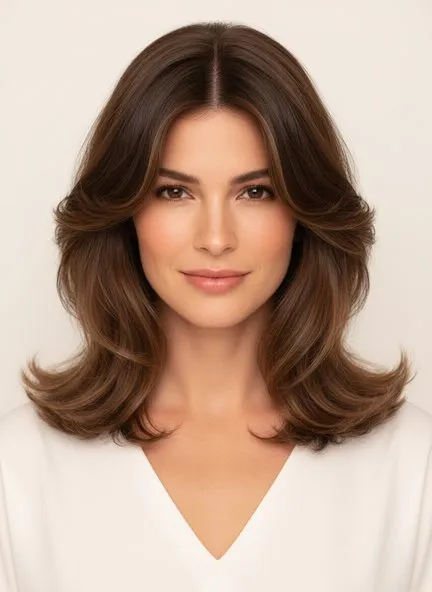
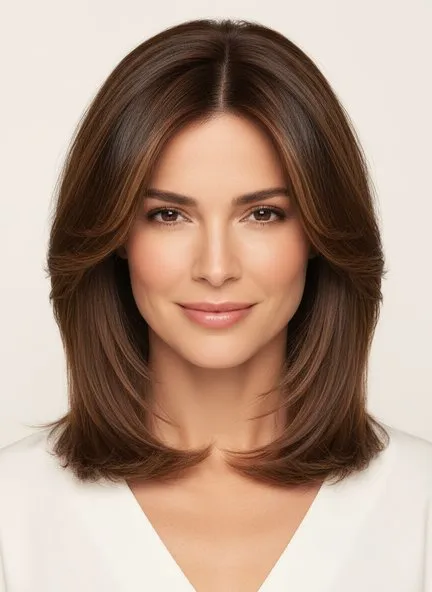
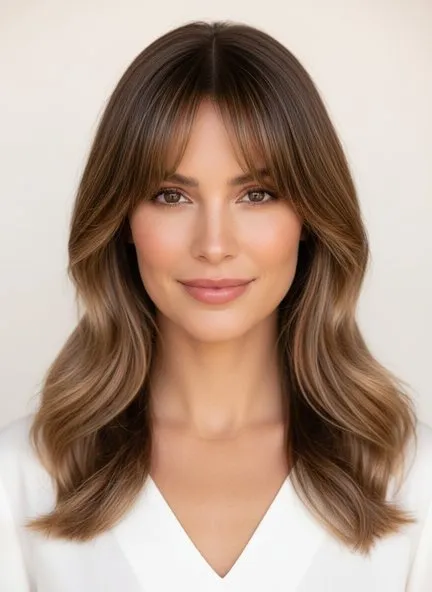
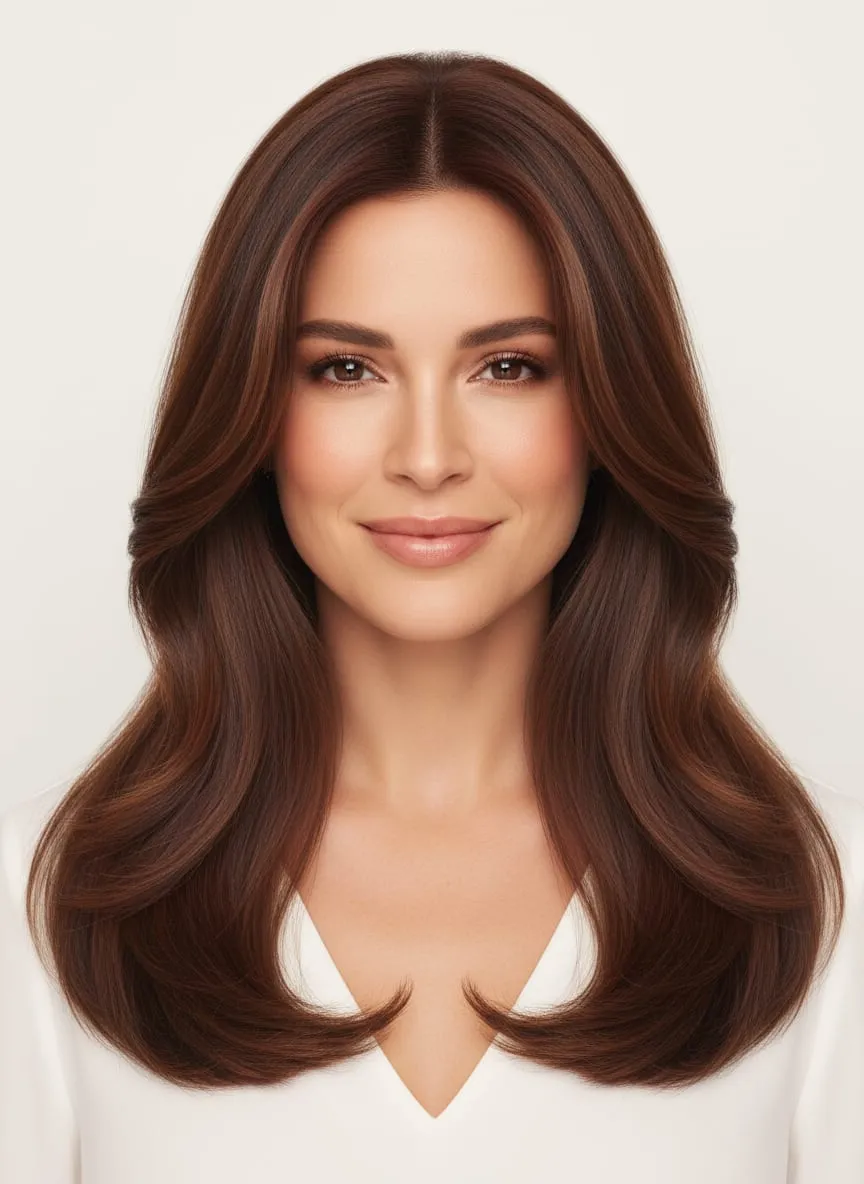
This is the cut for people who do not want a cut. Your length stays exactly where it was; all the work happens on the inside, where weight comes out of the mid-lengths so the hair moves instead of hanging in one solid triangle. It is the shape underneath most of the glossy, quietly expensive long hair you notice on other people, and the reason a good version gets called invisible is that you should not be able to point at the spot where any layer starts.
What they fix, and what they don’t
They fix weight. Hair that goes flat at the crown and spreads at the ends comes back into a taper, and a blow-dry that used to take twenty minutes takes ten. What they will not do is give you shape around the face — that is a separate request, and if you want your cheekbones involved you need face-framing layers cut on top of these. They also cannot invent volume. On fine hair, over-layering thins the ends until the length reads stringy, which is the single most common way this goes wrong.
Face shape barely matters here, since the length is doing the flattering. The exception is a long face: two curtains of hair falling past the collarbone with no horizontal interruption stretch it further. If that is you, either start the shortest layer up at the cheekbone or add a fringe.
Your density sets the depth
Thick or coarse hair can take deep internal layering and will look better for it — that is where the weight problem is worst. Medium density is the easy middle, four or five long layers and done. Fine hair should stop at two or three, cut long, with nothing resembling thinning shears near the last two inches. Curly hair wants this cut dry, curl by curl, so the layers land where the spring actually leaves them.
The least demanding thing on the menu
Genuinely low upkeep. A dusting of the ends every ten weeks or so keeps it honest, and because there was never a visible step, there is never an awkward stage to grow through. The phrase to avoid at the salon is thin it out — it invites shears at the ends and produces exactly the wispy, see-through finish you are trying to get away from. Ask for weight removed higher up instead.