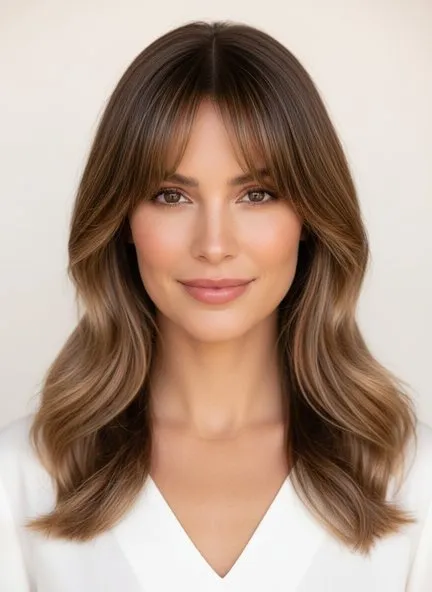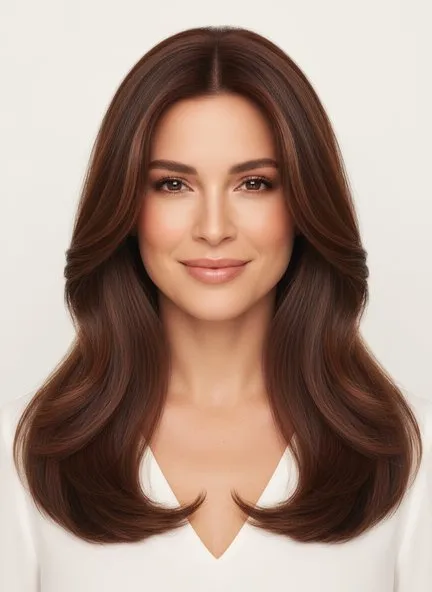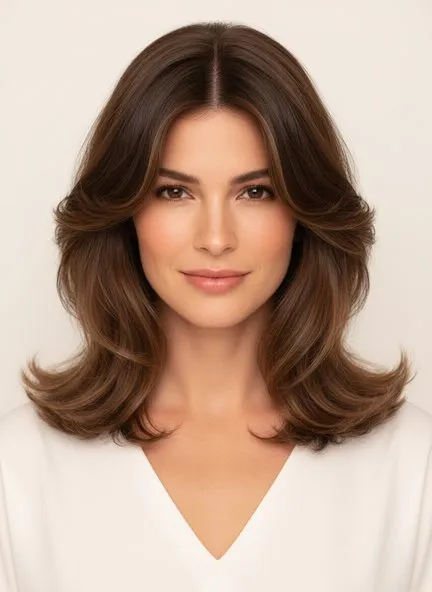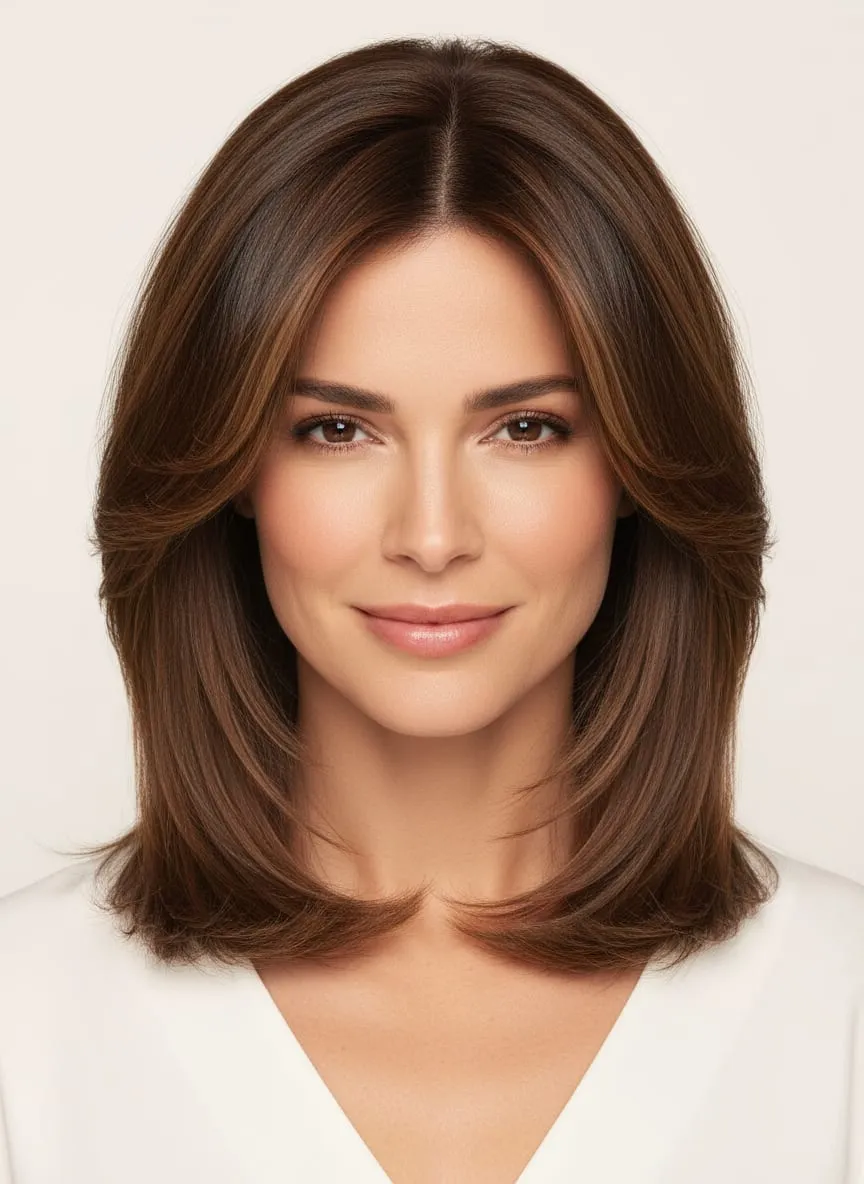
Face-Framing Layers
Face-framing layers add shape around the cheekbones without losing length. Where the shortest piece should land for your face, the real upkeep, and how to preview them on your selfie.
- Flatters
- ovalroundsquareheartdiamondoblong
- Upkeep
- medium
Ask your stylist for
“face-framing layers that blend into my length with no visible step where they meet — I will show you exactly where I want the shortest piece to start”
Opens the app on iPhone & Android. One selfie, no salon visit.
Not sure it is you? Find your face shape first.
Face-framing layers are not really a haircut. They are an adjustment you can add to almost any length — a lob, waist-length hair, a shag that already has texture in it — and they do exactly one job: cut a diagonal down the side of the face so the eye travels along your cheekbone instead of straight across the width of your head. Very little else in a salon changes this much for so few inches lost.
Where the shortest piece should land
That single decision is the whole cut, and most people are never asked about it. A layer starting at the cheekbone is the default placement and the most flattering one on oval and diamond faces, where the point is emphasis rather than correction. Drop the start to the jaw, or an inch below it, if your face reads round or square — the longer diagonal narrows instead of widening, and it stops a strong jaw from being underlined. Heart shapes benefit from the reverse: begin below the chin so the weight sits where the face is narrowest. On a long face, go higher than feels natural, around the outer corner of the eye, because a break that high interrupts the vertical line rather than extending it.
Hair that argues with them
Fine hair is the honest caution. Layering the front removes density from the one place you can least afford to lose it, so keep it to two or three soft pieces instead of a fully graduated frame. Tight curls have to be cut dry and placed by where the curl actually sits — a piece measured at the jaw can spring up to the cheek. And if you are growing out a blunt one-length cut, know that you are restarting the clock on the front sections.
Upkeep, and how to ask
Medium, but the forgiving kind. There is no hard grow-out line the way there is with a fringe; the layers simply drift down until they stop framing anything, which takes about three months. The styling cost is the part nobody mentions — that flicked-away finish is a round brush, not something the cut does by itself. Air-dried, it reads as soft movement instead — a perfectly good outcome, as long as you expected it. In the chair, name a landmark rather than a length. Stylists cut to the point you give them.