What's My Undertone? Warm, Cool, or Neutral — How to Tell

Your undertone is the constant hue beneath your skin’s surface — warm (golden or peachy), cool (pink or blue), or neutral (a balance of both). It doesn’t change when you tan or fade, and it’s what decides which makeup, hair, and clothing colors make you look lit from within instead of washed out. The fastest ways to spot it: check the veins on your inner wrist, notice whether gold or silver jewelry flatters you more, and see if pure white or soft cream looks better against your face.
Once you know your undertone, a lot of guesswork disappears. You stop buying the “medium” foundation that somehow turns orange, and you start reaching for the colors that actually work on you.
Undertone vs. skin tone: what’s the difference?
These two get used interchangeably, but they’re not the same thing.
Your skin tone — sometimes called surface tone — is how light or deep your complexion reads: fair, light, medium, tan, or deep. It shifts constantly. You darken in the sun, lighten over the winter, and change with your skincare and your health.
Your undertone is the hue sitting underneath that surface, and it stays fixed for life. A summer tan doesn’t turn a cool person warm; it just deepens the surface while the cool cast underneath stays exactly where it was.
Here’s why the distinction matters: two people can share the identical surface shade and still need completely different foundations, because one is warm and one is cool. That’s the whole reason “medium” on a bottle tells you so little on its own. The depth is only half the match — the undertone is the other half.
The 5 undertone tests you can do at home
No single test is foolproof, so run a few and look for agreement. Do them in natural daylight near a window, with a bare, makeup-free face.
-
The vein check. Turn your wrist over and look at the veins on the inside. Blue or purple veins point to a cool undertone. Green or olive-tinted veins point to warm. If you genuinely can’t decide between blue and green, that’s a sign you’re neutral.
-
The jewelry test. Hold a gold piece and a silver piece up to your face, one at a time. If gold makes your skin look brighter and healthier, you lean warm. If silver is the more flattering metal, you lean cool. If both look good, you’re likely neutral. This is one of the more reliable tests because you’re judging the effect on your whole face, not one small patch.
-
White vs. off-white. Drape a pure, bright-white top or piece of paper under your chin, then swap it for a soft cream or ivory one. Cool undertones look crisp and fresh against pure white. Warm undertones look healthier against cream or ivory — pure white can make them look slightly sallow.
-
The sun-reaction test. Think about how your skin behaves in the sun. People who burn easily and rarely tan often skew cool; people who tan quickly and deeply often skew warm. Be honest with yourself here: this is the weakest test on the list. Burning and tanning depend on melanin and sun exposure as much as undertone, so treat this as a loose hint, never a verdict.
-
The blush test. Notice the natural color that rises in your cheeks when you’re flushed — after a workout, or when you’re embarrassed. A rosy pink or slightly bluish flush suggests cool. A peachy or golden flush suggests warm.
What if the tests disagree?
First, don’t panic — this is completely normal. Most people get at least one mixed signal, and it usually means the same thing: you’re neutral. Neutral undertones carry a fairly even balance of warm and cool pigment, so gold and silver both look fine, blue and green veins both show up, and neither white nor cream wins by much. If your results are all over the place, neutral is the most likely answer.
The tests are also just tools. When three of them agree and one doesn’t, trust the majority and set the outlier aside.
Why olive skin confuses every test
Olive skin deserves its own explanation, because it breaks the usual rules. Olive complexions have a green or gray cast layered over the skin, which is technically neutral leaning slightly cool — but that green throws its own warmth into the mix.
The result: your veins might read green (pointing warm), silver might look great (pointing cool), and cream and white might both seem fine. That’s not a failed test — that’s olive skin doing exactly what olive skin does. If this is you, skip the extremes. Icy pastels and heavy golden tones both tend to fight your complexion, while muted, slightly warm and earthy shades let it settle.
Undertone at a glance
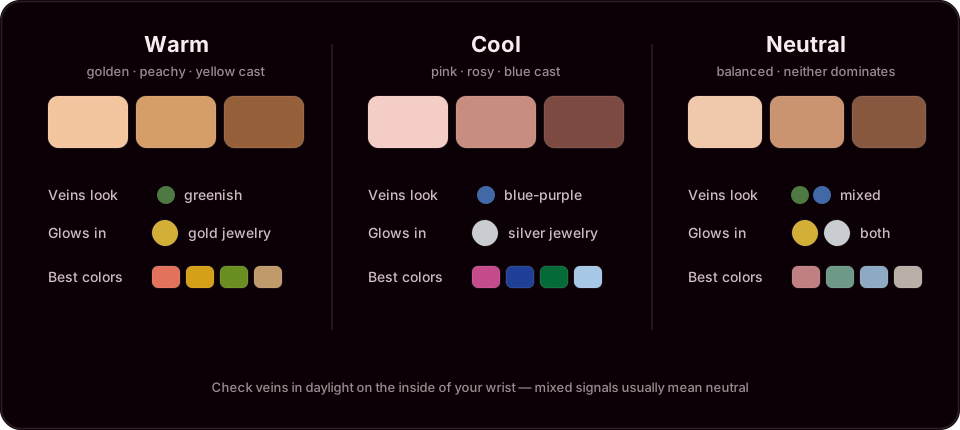
| Undertone | Wrist veins | Best jewelry | Colors that flatter |
|---|---|---|---|
| Warm | Green or olive | Gold, copper, bronze | Earth tones — camel, olive, tomato red, peach, warm coral; makeup in golden beige, terracotta, warm brown |
| Cool | Blue or purple | Silver, platinum, white gold | Jewel tones — emerald, sapphire, berry, true red, magenta; makeup in rosy pink, plum, cool taupe |
| Neutral | Blue-green mix | Gold and silver | Muted, balanced shades — jade, teal, soft red, dusty rose; most makeup families work |
What your undertone means for foundation, hair, and clothes
Knowing your undertone changes three practical decisions.
Foundation. Look for a letter code near the shade name: C for cool, W for warm, N for neutral. Match that letter to your undertone first, then fine-tune the depth. One caveat worth remembering: brands aren’t consistent. Some use “golden” for warm and “rose” for cool, others use numbers, and a “neutral” at one counter can skew warm at another. Use the letter as a starting point, then test on your jawline in daylight.
Hair color. Warm undertones tend to glow with golden, honey, caramel, copper, and chocolate browns that carry red or gold. Cool undertones usually suit ash tones, cool blondes, espresso, and blue-blacks. Getting this pairing right is what makes a color look expensive instead of brassy — there’s a full breakdown in our guide to choosing hair color for your skin tone.
Clothes. Use the table above as your shortcut. Warm undertones come alive in earthy, sun-baked shades; cool undertones look sharpest in clear jewel tones; neutrals get the widest range, especially in muted, blended colors.
Undertone is really just step one. Your full color palette also depends on how deep your coloring is and how much contrast you have between your skin, hair, and eyes — the framework behind seasonal color analysis you can do at home. If you’d rather skip the manual tests, Get The Look reads your undertone straight from a selfie as part of its color analysis, then hands you a personalized palette to shop from.
Read your undertone from a selfie →
Your 5-minute undertone test, in order
Short on time? Run the tests in order of reliability and stop once you see a clear pattern:
- Jewelry test — the single most telling check. Gold flatters warm, silver flatters cool.
- White vs. cream — cool wins in pure white, warm wins in ivory.
- Blush test — rosy flush leans cool, peachy flush leans warm.
- Vein check — blue means cool, green means warm, mixed means neutral.
- Sun reaction — use this only to break a tie, never on its own.
If four of these line up, you have your answer. If they scatter, you’re almost certainly neutral — and you get to enjoy the widest palette of anyone.
FAQs
- Can my undertone change over time?
- No. Your undertone is the fixed hue beneath your skin and stays the same your whole life. What changes is your surface tone — you get darker in summer and lighter in winter — but the warm, cool, or neutral cast underneath does not move.
- What undertone am I if my veins look both blue and green?
- A mix of blue and green almost always points to a neutral undertone. It means you have a balance of warm and cool pigment, so both gold and silver tend to look good on you. Run the jewelry and white-vs-cream tests to confirm.
- Is olive skin warm or cool?
- Olive skin is technically neutral, leaning slightly cool, but with a green-gray cast that adds its own warmth. That combination is why olive complexions confuse almost every standard test. Most olive skin does best in muted, slightly warm colors rather than icy or overly golden ones.
- Does undertone matter for foundation?
- Yes — it matters more than your surface shade. Matching depth (light, medium, deep) but ignoring undertone is the top reason foundation looks ashy or orange. Look for a C, W, or N code on the bottle and match it to your undertone, not just the number.