Men's Hairstyles by Face Shape: Find the Cut That Fits
The right men’s haircut works with your face shape, not against it. The logic is simple: add height up top for a round face, soften the hard angles on a square jaw, balance out the length on an oblong face, and keep width in check for heart and diamond shapes. If your face is oval, you drew the easy card — almost anything looks good.
How do I figure out my face shape?
You need to see your whole face, so get your hair off your forehead first. Pull it back, push it up, or throw on a headband — anything that exposes your hairline.
Now look in the mirror straight-on, or snap a photo with your face square to the camera and a neutral expression. You are comparing four things:
- Forehead width — how wide you are across the top.
- Cheekbone width — usually the widest point of your face.
- Jaw width — how wide it is, and how square or round the corner is.
- Face length — hairline to chin.
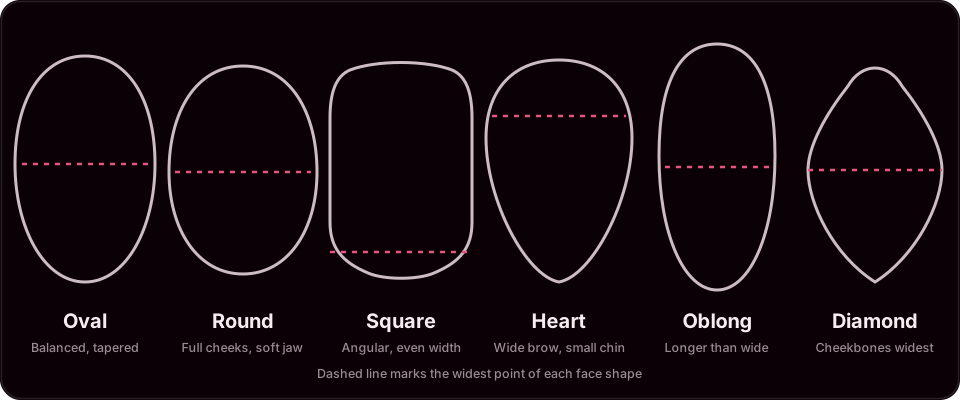
You can eyeball it, but a tape measure kills the guesswork. Round faces are close to as wide as they are long, with soft edges. Square and oblong faces share a strong, straight jaw — the difference is length. Heart and diamond faces both taper toward the chin. If nothing jumps out at you, you are probably oval or near it.
Best haircuts for an oval face
An oval face is a touch longer than it is wide, with a forehead slightly broader than the jaw and no hard angles. It is the shape most cuts are designed around.
Your go-to options: a textured crop, a classic side part, a medium quiff, or a low-key pompadour. Fades from low to high all sit well, since your proportions do not need correcting.
One thing to avoid: a heavy, brow-covering fringe. It eats into your forehead and can drag an oval toward looking round or short. Keep some forehead in play.
Try these cuts on your own face →
Best haircuts for a round face
A round face reads about as wide as it is long, with full cheeks and a soft jaw — no sharp corners anywhere.
Your job is to fake length, and height on top with tight sides does exactly that. Reach for a high or mid fade with a textured quiff, a pompadour, a faux hawk, or an angular fringe pushed up and to the side. The vertical lift stretches the face; the short sides slim it.
Avoid anything that piles width onto the sides or rounds off the top — full floppy fringes, mushroom cuts, and an all-over buzz all make a round face rounder.
Try these cuts on your own face →
Best haircuts for a square face
A square face has a strong, straight jaw, with the forehead and jawline close in width. It is a photogenic shape, but too many hard lines can tip it into looking boxy.
Play to the jaw while softening the top. A textured crop, a crew cut, a short brushed-up quiff, or a clean side part all work. A buzz or a short French crop leans into the structure if you want to look sharp.
Avoid stacking rigid geometry on top of an already-angular face — a blunt, boxy top with razor-hard edges reads severe. A little texture keeps it human.
Try these cuts on your own face →
Best haircuts for an oblong or rectangle face
An oblong face is noticeably longer than it is wide, with a straight jaw and often a taller forehead. Adding height only makes it look longer, so do the opposite.
Keep it low and wide. A side part, a French crop with the fringe forward, a textured crop with a fringe, or medium length with a bit of side volume all cut the length down. A low fade beats a high one here, and curtains can work too.
Avoid tall pompadours and sky-high quiffs — they stretch an already-long face. A long, pointed beard does the same, so watch the chin.
Try these cuts on your own face →
Best haircuts for a heart face
A heart face is widest at the forehead and cheekbones and narrows to a pointed chin.
Balance means taking width off the top and adding fullness lower down. A medium-length cut with a side-swept fringe, a textured crop, or longer, moving hair on top all help. Keep the sides a touch fuller with a mid fade rather than a skin-tight one.
Avoid slicked-back styles that expose the full width of your forehead, and skip the high-and-tight — bare sides plus a broad top exaggerate the imbalance.
Try these cuts on your own face →
Best haircuts for a diamond face
A diamond face is narrow at the forehead and jaw and widest at the cheekbones, with angular lines.
You want to build width up top and keep some length near the jaw so the cheekbones stop dominating. A textured fringe adds forehead width, while curtains, a side part, or medium length with movement fill out the frame.
Avoid a tight high-and-tight or heavily faded sides at the cheekbone — stripping hair there makes the widest part of your face look even wider.
Try these cuts on your own face →
How does a beard change the equation?
Facial hair is a second lever, and it can quietly fix what your haircut cannot.
A squared, boxed beard adds length and angle to the jaw — good news for a round face that needs structure. For an oblong face, keep the beard short on the chin and fuller on the cheeks to add width instead of length, and skip the long, pointed look.
A square jaw can go either way: soften it with a rounded, trimmed beard, or double down with a crisp, defined one. For heart and diamond faces, a beard with some fullness along the jaw builds out a narrow chin and balances the point up top.
Face shape cheat sheet
| Face shape | Best cuts | Avoid |
|---|---|---|
| Oval | Textured crop, side part, medium quiff, any fade | Heavy brow-covering fringe |
| Round | High/mid fade + quiff, pompadour, faux hawk, angular fringe | Bowl cuts, all-over buzz, full sides |
| Square | Textured crop, crew cut, buzz, side part | Boxy blunt tops with hard edges |
| Oblong / rectangle | Side part, French crop, textured fringe, low fade | Tall pompadours and high quiffs |
| Heart | Side-swept fringe, textured crop, mid fade | Slick-backs, high-and-tight |
| Diamond | Textured fringe, curtains, side part | Faded sides at the cheekbone |
How do I know a cut works before the barber cuts?
A photo of a haircut on a model tells you nothing about how it sits on your face. The fix is to try it on yourself first.
Get The Look lets you preview cuts, fades, and colors on a photo of your own face before you are in the chair — you will see how the height, the fringe, and the fade land on your actual proportions. If you want the step-by-step, here is how to try on hairstyles on your face. And if you are still not sure which shape you are, the face shape guide walks through the measuring method in more detail.
What to tell your barber
Walk in with three things and you will get the cut you pictured:
- Guard number and fade height for the sides. A 0 or 1 for a skin or tight fade, a 2 or 3 for something softer. Then say where the fade starts: low (just above the ear), mid (around the temple), or high (up near the crown).
- Length and texture on top. Try “leave about two inches, point-cut so it is textured, not blunt.” Texture is what softens a square face and gives a round face movement.
- The effect you are after. Name it — more height, a forward fringe, fuller sides — so your barber can steer as they go.
And bring a photo. Better yet, bring a photo of the cut on your own face.
FAQs
- How do I know my face shape as a guy?
- Pull your hair off your forehead and look straight into a mirror or a front-facing photo. Compare your forehead, cheekbone, and jaw width against your face length — round faces are about as wide as they are long, oblong faces are much longer than wide, and heart and diamond faces narrow toward the chin. If nothing stands out, you are likely oval or close to it.
- What is the best haircut for a round face man?
- Go for height on top and short sides to make the face look longer and slimmer. A high or mid fade with a textured quiff, a pompadour, or a faux hawk all do the job. Avoid bowl cuts, full fringes, and all-over buzz cuts, which make a round face look rounder.
- Should men with square faces get fades?
- Yes. Fades suit square faces well, especially paired with a textured crop or a short quiff on top. The trick is to add a little texture rather than stacking blunt, boxy lines on an already-angular face, which can read severe.
- What should I ask my barber for?
- Bring guard numbers for the sides, the fade height (low, mid, or high), and how much length and texture you want on top. Naming the effect you are after — more height, a forward fringe, or fuller sides — helps your barber adjust as they cut. A reference photo, ideally of the cut on your own face, seals it.