What Haircut Suits My Face Shape? The Complete Guide
The haircut that suits your face shape is the one that balances your proportions: it softens width where your face is widest and adds fullness where it’s narrow. Identify your shape first — oval, round, square, heart, oblong, or diamond — then pick a cut that nudges your overall silhouette toward a balanced oval. That single idea will steer you better than any rigid list of do’s and don’ts.
None of this is about hiding your face. It’s about knowing where a cut adds volume and where it removes it, then pointing that effect at the right spot. Once you can see your proportions clearly, choosing a flattering style stops feeling like a guess.
How do I figure out my face shape?
Pull all your hair back off your face, stand in front of a mirror or take a straight-on photo in even light, and look at the outline your hairline and jaw make. You’re comparing four measurements: the width of your forehead, the width of your cheekbones, the width of your jaw, and the length of your face from hairline to chin.
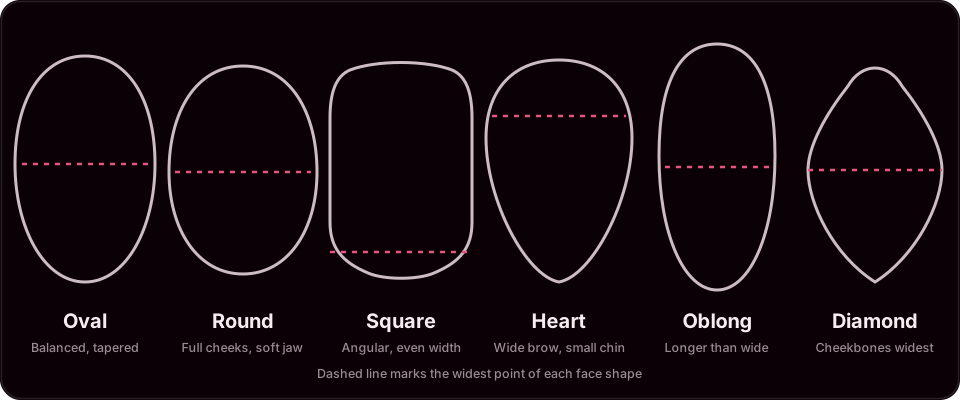
Here’s the shorthand. If your face is about one and a half times longer than it is wide and everything tapers gently, you’re likely oval. If length and width are close and the lines are soft, that’s round. Similar width from forehead to jaw with a strong, defined jaw is square. A wider forehead narrowing to a pointed chin is heart. A face clearly longer than it is wide is oblong. Widest at the cheekbones with a narrow forehead and chin is diamond.
Don’t agonize over millimeters. Most faces lean toward one shape while borrowing from another, and that’s normal — you’re looking for the closest match, not a verdict.
What haircuts suit an oval face?
An oval face runs about one and a half times longer than it is wide, with a forehead marginally wider than the jaw and a softly rounded chin. Its proportions are already balanced, which is why it’s considered the most versatile shape.
Long layers, a blunt lob, curtain bangs, and a textured pixie or butterfly cut all sit beautifully here. The one thing to watch is over-correcting: a heavy, dense fringe that hides the forehead can shorten the face, and stacking volume at the cheeks can throw off the balance you already have. Because almost everything works, oval faces are the best candidates for experimenting with the styles in our roundup of trending haircuts for women in 2026.
See these cuts on your own face →
What haircuts suit a round face?
A round face has similar width and length, full cheeks, and a soft jaw with no hard angles. The goal is to add length and introduce a few angles so the face reads longer and slimmer.
Reach for long layers falling past the collarbone, a long A-line bob, side-swept or curtain bangs, a center part, or a shaggy wolf cut that builds vertical texture. Avoid a blunt chin-length bob and straight-across bangs — both draw a firm horizontal line across the widest part of your face and echo the roundness instead of breaking it up.
See these cuts on your own face →
What haircuts suit a square face?
A square face is roughly equal in width from forehead to jaw, with a strong angular jaw and defined corners. Here you want to soften those angles and add movement around the edges.
Soft face-framing layers, wispy curtain bangs, a textured shag or wolf cut, and long loose waves all round out the corners nicely. Steer clear of a blunt bob that ends exactly at the jawline, along with heavy one-length styles — they trace the squarest part of your face and make the angle look sharper.
See these cuts on your own face →
What haircuts suit a heart-shaped face?
A heart-shaped face is wider at the forehead and cheekbones and tapers to a narrow, sometimes pointed chin. The aim is to add visual width around the jaw and take weight off the top.
A chin-length bob, a collarbone lob, side-swept bangs, and layers that begin around the chin all build fullness lower down where you want it. Avoid short, high-volume styles stacked on top, which widen an already-broad forehead, and anything that tapers sharply toward the chin and exaggerates the point.
See these cuts on your own face →
What haircuts suit an oblong face?
An oblong face is noticeably longer than it is wide, with fairly straight sides and often a longer forehead. Your job is to add width and visually shorten the length.
A blunt bob or lob, a butterfly cut with plenty of face-framing layers, curtain bangs or a full fringe, and soft waves that build width at the cheeks all work in your favor. What to avoid is long, flat, one-length hair and tall volume at the crown — both stretch the face even longer.
See these cuts on your own face →
What haircuts suit a diamond face?
A diamond face is widest at the cheekbones, with a narrower forehead and a narrow, often pointed chin. You want to widen the forehead and jaw while easing the width at the cheekbones.
A chin-grazing bob, curtain or side-swept bangs to fill out the forehead, layers that add fullness near the jaw, and textured ends around the chin all balance the shape. Avoid slicked-back styles that expose the narrow forehead and volume piled at the crown, both of which pull attention back to the widest point.
See these cuts on your own face →
Face shape to haircut, at a glance
| Face shape | Best cuts | Avoid |
|---|---|---|
| Oval | Long layers, blunt lob, curtain bangs, textured pixie | Heavy full fringe, cheek-level volume |
| Round | Long layers, A-line bob, side-swept bangs, wolf cut | Blunt chin bob, straight-across bangs |
| Square | Soft layers, curtain bangs, shag, long waves | Jaw-length blunt bob, one-length styles |
| Heart | Chin-length bob, collarbone lob, chin-start layers | Top-heavy volume, sharp chin taper |
| Oblong | Blunt bob, butterfly cut, full fringe, soft waves | One-length long hair, crown volume |
| Diamond | Chin-grazing bob, curtain bangs, jaw-level layers | Slicked-back styles, crown volume |
What if I’m between two shapes?
Most people are. Faces rarely fit one template cleanly — you might read as round-square or oval-heart — and the guidelines above are starting points, not rulings. When you’re on the fence, follow the trait you most want to balance: soften the jaw if it reads strong, add width if the face feels long, and let that decide the cut.
This is exactly the moment guessing falls apart and seeing wins. Trying a cut on your own photo, instead of imagining it, tells you in seconds whether curtain bangs actually flatter your forehead or whether a bob lands at an awkward spot. Get The Look does this from a single selfie, so you can compare a wolf cut, a lob, and curtain bangs side by side before you ever sit in the chair — our walkthrough on how to try on hairstyles using your own face covers the workflow step by step.
The same balancing logic works for everyone, not just women — if you’re helping a partner or a son, the companion guide to men’s hairstyles by face shape uses the identical proportional approach. You can browse the full set of try-on tools on the Get The Look home page.
Your three-step plan
Start with your shape. Pull your hair back, take one straight-on photo, and compare your forehead, cheekbones, jaw, and face length to find the closest match — or the two shapes you sit between.
Then shortlist. Pick two or three cuts from your shape’s row in the table above, favoring the ones that address the feature you most want to balance rather than the trendiest name.
Finally, test before you commit. Try your shortlist on your own photo so you’re reacting to what the cut actually looks like on you, then walk into your appointment with a clear reference instead of a vague idea. That’s the difference between a haircut you tolerate and one you love.
FAQs
- How do I figure out my face shape at home?
- Pull all your hair back, then take a straight-on photo or look in a mirror in even light. Compare four things: the width of your forehead, the width of your cheekbones, the width of your jaw, and the length from hairline to chin. The measurement that stands out — a strong jaw, a long face, wide cheekbones — points you to your shape.
- What is the most universally flattering haircut?
- Long layers that fall just past the collarbone with soft, face-framing pieces suit almost every face shape. They add movement, remove weight, and can be parted to widen or lengthen the face as needed. Curtain bangs are a close second because they soften the forehead without committing to a heavy fringe.
- Do curtain bangs suit round faces?
- Yes. Curtain bangs part in the middle and sweep outward, which draws vertical lines down the sides of the face and makes a round face look longer and slimmer. Keep them on the longer side, grazing the cheekbones, rather than short and blunt across the forehead.
- How often should I get a haircut?
- Most people keep a shape looking sharp with a trim every six to eight weeks, while shorter cuts like a pixie or bob need a touch-up every four to six weeks to hold their line. If you are growing your hair out, a light trim every ten to twelve weeks removes split ends without losing length.