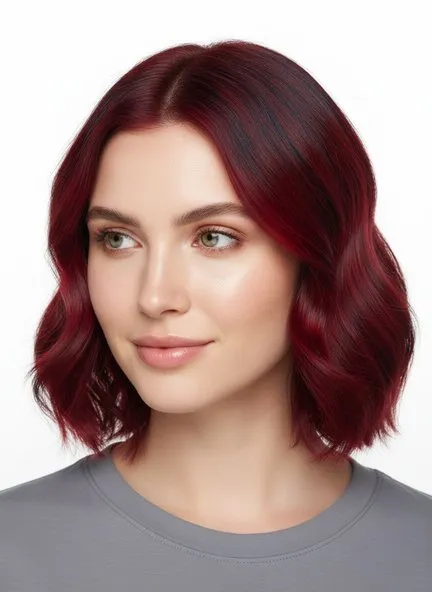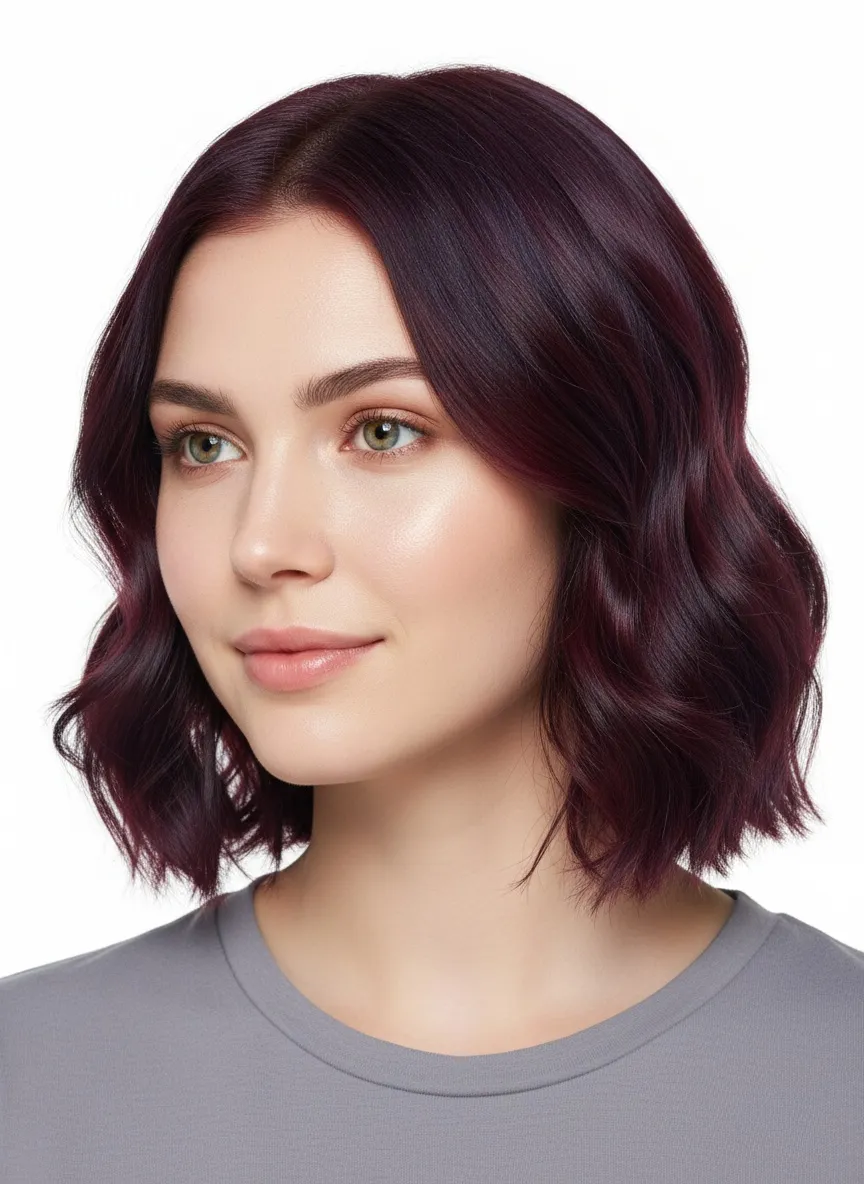
Deep Burgundy
Built on violet instead of orange, deep burgundy is the wine red cool skin can wear. Who it flatters, why it is the hardest shade to reverse, and a selfie try-on.
- Undertones
- cool
- Color seasons
- Deep WinterTrue WinterBright Winter
- Upkeep
- high
Opens the app on iPhone & Android. One selfie, no salon visit.
Not sure it is you? Find your color season first.
Most reds are built on orange. Burgundy is built on violet, and that single difference decides both who can wear it and how badly it behaves on the way back out.
The one red for cool skin
Because the base is blue-violet rather than copper, burgundy is the dark red that suits pink and rosy complexions — the ones that turn sallow next to gold. Deep Winter and True Winter take it at full saturation; Bright Winter can carry it where the contrast against the skin stays high. Neutral skin manages it if the formula is kept brown-heavy rather than jewel-bright.
Golden and bronze complexions are where it stalls. Violet sitting against yellow-gold skin cancels the warmth people usually like about their own face, and the result reads gray instead of rich. Low-contrast coloring is the other caution: fair skin, light eyes, soft features. Burgundy is a loud color, and on a quiet face it becomes the only thing anyone sees.
Violet leaves first, and it bleeds
Violet is the first pigment to abandon you. Even applied over a dark base with no lifting, burgundy shifts within three to four weeks, and where it lands depends on your natural hair — usually a warm brown-red that looks nothing like the wine you paid for. That drift, not your regrowth, sets the schedule: a depositing gloss or color conditioner every three to four weeks, with a full root application only every eight to ten. Budget for the first week too. Burgundy bleeds, and pillowcases, pale towels, gym collars, and shower walls all take a share.
Getting out of it later
Think about this before you book. Red-violet stains the hair shaft more stubbornly than any other family and does not lift cleanly — a color remover strips the violet and leaves orange behind, which then needs its own correction appointment. On previously bleached or highlighted sections, burgundy is effectively permanent; returning to blonde means lightening hair that has already been processed twice. If there is any real chance you will want to be light again within the year, do it as a semi-permanent and keep it off the pre-lightened pieces entirely.